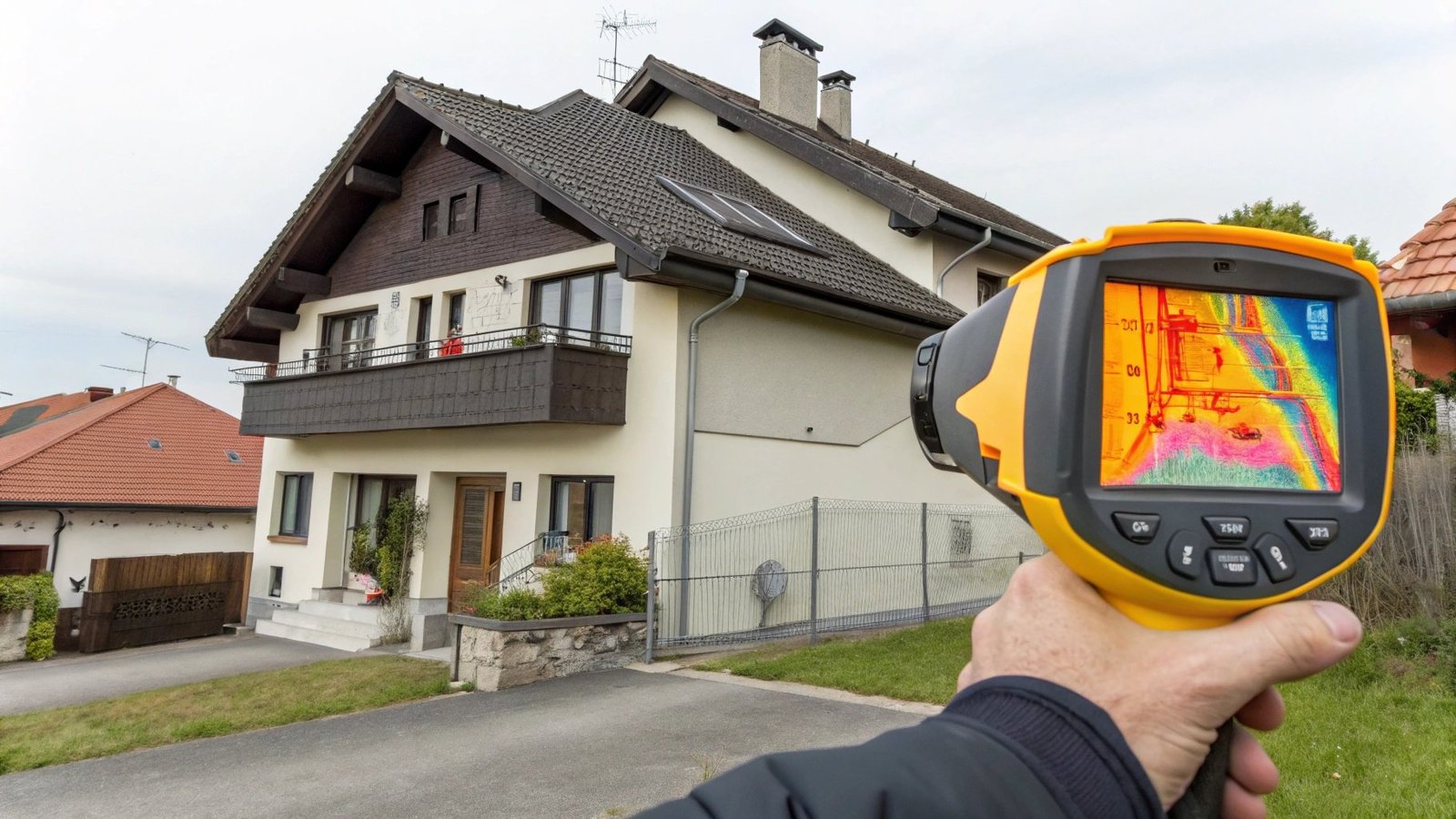
Energy costs are a major concern for homeowners, making energy efficiency increasingly important when buying a property. House surveys now routinely assess thermal performance, insulation, and heating systems. This comprehensive guide explains what surveyors look for regarding energy efficiency, how to interpret findings, and what improvements deliver the best returns when you're buying a home.
Why Energy Efficiency Matters in Property Surveys
Energy efficiency directly impacts your ongoing costs and property value. A poorly insulated home costs hundreds or thousands more annually in heating bills compared to an efficient property. With energy prices remaining high, understanding a property's thermal performance before purchase is essential financial planning.
A qualified surveyor conducting a home survey examines elements affecting energy efficiency including insulation levels in roofs, walls, and floors, heating system condition and efficiency, window and door thermal performance, ventilation and air tightness, and renewable energy installations if present. These observations help you understand both immediate running costs and potential improvement investments.
Financial Impact
The difference between a property with poor energy efficiency (EPC rating F or G) versus good efficiency (rating C or B) can be £1,500-£3,000 annually in energy costs. Over a 25-year mortgage, this represents £37,500-£75,000—a significant financial consideration when buying a property.
Understanding Energy Performance Certificates (EPCs)
What EPCs Tell You
Every property marketed for sale requires an Energy Performance Certificate showing its energy efficiency rating from A (most efficient) to G (least efficient). The EPC estimates annual energy costs and recommends improvements. However, EPCs are basic assessments and don't replace the detailed examination a building survey provides.
EPCs are valid for 10 years, meaning the certificate for a property you're viewing could be a decade old. Building conditions change—insulation may have been added, heating systems replaced, or windows upgraded. Your house survey provides current condition assessment beyond what EPCs offer.
Typical Annual Energy Costs by EPC Rating 2026
| EPC Rating | Description | Annual Cost (3-bed house) |
|---|---|---|
| A-B | Very efficient | £800-£1,200 |
| C | Good efficiency | £1,200-£1,600 |
| D | Average | £1,600-£2,000 |
| E | Below average | £2,000-£2,500 |
| F-G | Poor efficiency | £2,500-£4,000+ |
EPC Limitations
EPCs use standardized assumptions about occupant behavior and don't account for actual usage patterns. They also miss subtle issues like thermal bridging, air leakage points, or insulation defects that comprehensive surveys identify. When organising a house survey, ask your surveyor to comment specifically on energy efficiency elements beyond EPC observations.
What Surveyors Assess for Energy Efficiency
1. Insulation Assessment
Insulation is the foundation of energy efficiency. During a home survey, surveyors examine accessible insulation in roof spaces, noting thickness, type, and condition. Modern building regulations require at least 270mm of roof insulation, but older properties often have 50-100mm or none at all.
Wall insulation is harder to assess without invasive investigation, but surveyors note wall construction type. Solid walls (pre-1920s properties) have no cavity and are harder to insulate than cavity walls (1920s onwards) where insulation can be blown into the gap. External wall insulation or internal insulation are options for solid walls but represent significant investment.
Insulation Issues
Surveyors flag problems like compressed or wet insulation (reducing effectiveness), inadequate coverage leaving cold spots, blocked ventilation from poorly installed insulation, and missing insulation in key areas like over bay windows or around loft hatches. These issues significantly impact thermal performance.
2. Heating System Evaluation
Your heating system's efficiency dramatically affects energy costs. Qualified surveyors assess boiler age, type, and condition. Modern condensing boilers are 85-95% efficient, while older non-condensing boilers operate at 60-70% efficiency. Replacing an old boiler costs £2,000-£4,000 but saves £300-£600 annually.
Surveyors also examine heating controls—programmable thermostats, thermostatic radiator valves, and zoning systems all improve efficiency. Properties lacking modern controls waste energy heating empty rooms or maintaining high temperatures when occupants are away.
3. Windows and Glazing
Windows are major sources of heat loss. Single glazing loses five times more heat than modern double glazing. Surveyors note glazing types throughout the property during inspection of the property. They also assess window condition—poorly fitting windows leak air even if double glazed, reducing efficiency.
Modern windows should be double glazed with low-E coatings and argon-filled cavities achieving U-values of 1.4 or lower. Older double glazing from 1980s-1990s may have U-values of 3.0+, performing only marginally better than good single glazing. Your house survey report clarifies what you're inheriting and potential improvement opportunities.
Window Upgrade Costs vs. Savings 2026
| Upgrade | Cost (3-bed house) | Annual Saving | Payback Period |
|---|---|---|---|
| Single to double glazing | £5,000-£8,000 | £200-£400 | 15-25 years |
| Old double to modern triple | £6,000-£10,000 | £100-£200 | 30-50 years |
| Secondary glazing | £800-£1,500 | £100-£150 | 5-10 years |
4. Ventilation and Air Tightness
Efficient properties balance insulation with appropriate ventilation. Over-sealed homes without adequate ventilation develop condensation and mold problems. Surveyors assess whether properties have suitable ventilation—trickle vents in windows, extractor fans in bathrooms and kitchens, and adequate air changes preventing moisture buildup.
Conversely, properties with excessive draughts through gaps around doors, windows, or service penetrations waste energy. While building surveys don't include formal air-pressure testing, experienced surveyors identify obvious air leakage problems during their inspection.
5. Renewable Energy Systems
Properties increasingly feature renewable technologies like solar panels, heat pumps, or solar thermal systems. Surveyors assess these installations noting age, condition, and whether they're owned or leased (leased panels can complicate sales). They also check for appropriate certification and whether installations appear professionally completed.
While surveyors aren't renewable energy specialists, they identify concerns warranting specialist assessment. For example, solar panels may affect roof structure or create roof covering access issues for future repairs. Heat pumps require different heating system designs than traditional boilers—surveyors note whether these appear appropriate.
Most Cost-Effective Energy Improvements
Quick Wins Under £1,000
Several improvements deliver immediate benefits at low cost:
- Loft insulation upgrade: £300-£500 for typical house, saves £100-£200 annually
- Draught proofing: £100-£300 for doors and windows, saves £50-£100 annually
- Hot water tank insulation: £50-£100, saves £40-£80 annually
- Heating controls upgrade: £200-£400, saves £100-£150 annually
- LED lighting throughout: £100-£200, saves £80-£120 annually
These improvements typically pay back within 2-5 years and require minimal disruption. If your home survey identifies poor loft insulation or inadequate heating controls, prioritize these upgrades immediately after purchase.
Medium-Term Investments £1,000-£10,000
Investment Options
- Boiler replacement: £2,000-£4,000, saves £300-£600 annually
- Cavity wall insulation: £500-£1,500, saves £150-£300 annually
- Floor insulation: £800-£2,000, saves £100-£200 annually
- Solar PV panels: £5,000-£8,000, saves £400-£600 annually plus export income
These investments offer 5-15 year payback periods and significantly improve home comfort alongside energy savings.
Major Improvements Over £10,000
Substantial improvements suit properties with poor efficiency or homeowners planning long-term occupancy:
- External wall insulation: £8,000-£15,000, saves £300-£600 annually
- Internal wall insulation: £4,000-£8,000, saves £250-£500 annually
- Air source heat pump: £8,000-£14,000, saves £300-£800 annually vs. oil/LPG
- Complete window replacement: £5,000-£10,000, saves £200-£400 annually
These projects have 15-30 year payback periods based purely on energy savings. However, they also increase property value and improve comfort, making total return on investment more favorable than energy savings alone suggest.
Using Survey Findings to Negotiate
Poor Energy Efficiency as Negotiation Leverage
If your house survey reveals poor energy efficiency not disclosed in property marketing or reflected in pricing, you have negotiation grounds. Properties marketed as "recently renovated" but lacking basic insulation improvements warrant price discussion.
Calculate the cost of bringing energy efficiency to reasonable standards. For example, if a property needs £8,000 in insulation and heating upgrades, requesting a £5,000-£8,000 price reduction is reasonable. Sellers understand buyers increasingly prioritize energy efficiency, making this legitimate negotiation territory.
Negotiation Example
Property asking price: £300,000 (EPC rating E)
Survey identifies needed upgrades:
- Loft insulation: £400
- Boiler replacement: £3,200
- Heating controls: £300
- Cavity wall insulation: £1,200
- Total improvement costs: £5,100
Negotiated outcome: £296,000 purchase price, reflecting improvement needs. Buyer implements upgrades post-purchase using savings.
Future-Proofing Considerations
Regulatory Trends
UK energy efficiency regulations continue tightening. Properties with EPC ratings below C may face rental restrictions or increased stamp duty in future. When buying a property, consider not just current energy costs but future regulatory compliance costs.
If your survey reveals a property rated E, F, or G, budget for energy improvements sooner rather than later. Waiting until regulations force upgrades means competing for contractors and potentially paying premium prices. Proactive improvement now avoids future compliance stress.
Electrification and Heat Pumps
Government policy incentivizes moving from gas heating to electric heat pumps. Properties with poor insulation struggle with heat pump efficiency—they work best in well-insulated homes. If considering future heat pump installation, prioritize insulation upgrades first. Your surveyor's observations on current insulation levels help plan this pathway.
Frequently Asked Questions
Should I reject properties with poor energy efficiency?
Not necessarily. Factor improvement costs into your offer price and budget. A well-located property with good bones but poor efficiency can be excellent value if priced appropriately. Survey findings let you make informed decisions rather than discovering problems post-purchase.
Do energy efficiency improvements increase property value?
Yes, but returns vary. Studies show properties with high EPC ratings sell for 5-10% more than inefficient equivalents. However, improvement costs don't always fully translate to increased value. Focus on improvements that benefit you during ownership, with value increase as secondary benefit.
Can I claim grants for energy improvements?
Various government and local authority schemes offer grants or subsidies for energy improvements, particularly for low-income households or properties with very poor efficiency. Research available schemes when budgeting improvements identified in your survey.
Should I get a specialist energy survey as well as a building survey?
For most properties, a comprehensive building survey provides sufficient energy efficiency assessment. Specialist thermal imaging surveys or air tightness tests suit specific situations—properties with suspected significant heat loss, planning major retrofits, or pursuing specific energy performance targets.
How quickly will energy improvements pay for themselves?
Payback periods range from 2-3 years for simple improvements like loft insulation to 20-30 years for expensive interventions like external wall insulation. However, improvements also increase comfort, property value, and future-proof against regulatory changes—benefits beyond pure financial payback.
Conclusion: Energy Efficiency and Property Value
Energy efficiency increasingly influences property desirability and value. A comprehensive home survey examining thermal performance, heating efficiency, and improvement opportunities provides crucial information for informed property decisions. Understanding a property's energy characteristics helps you negotiate fair prices, budget for improvements, and enjoy lower running costs.
Whether you're buying a property rated A or G, professional survey advice on energy performance protects your investment and guides improvement priorities. The modest survey cost delivers comprehensive understanding of energy characteristics that EPCs alone cannot provide.
Want to Understand a Property's Energy Performance?
Our comprehensive house surveys include detailed energy efficiency assessments. Get expert advice on heating systems, insulation, and improvement opportunities before you buy.
Request Your Survey Quote Today