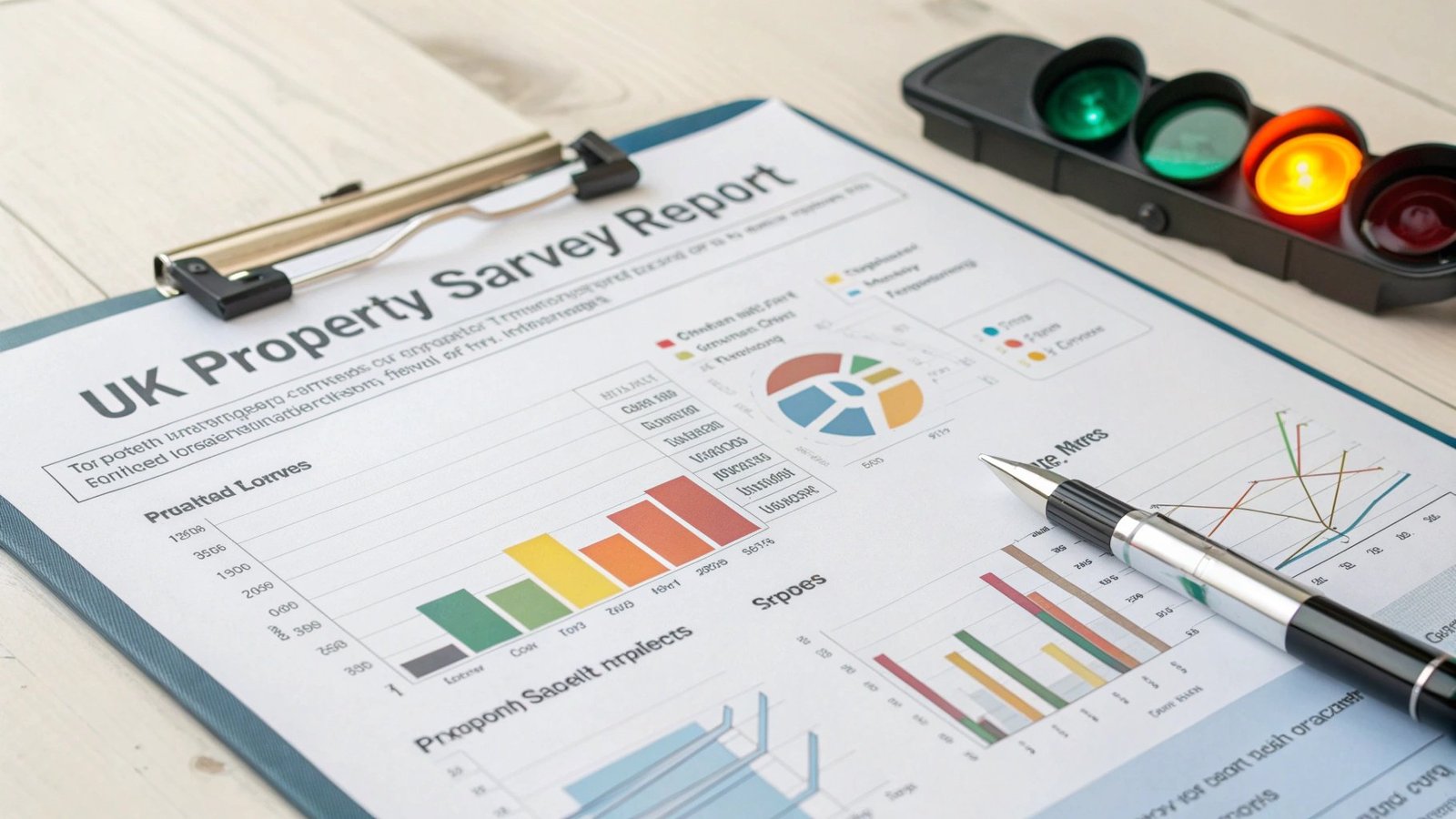
You've just received your house survey report, and it's full of technical terms, traffic light ratings, and detailed observations. If you're feeling overwhelmed, you're not alone. Many buyers struggle to interpret their survey findings, which can lead to unnecessary worry or, worse, missing critical issues.
As a surveyor with over 20 years of experience, I've prepared thousands of reports and helped countless buyers understand their findings. In this guide, I'll walk you through exactly how to read your house survey report, what the different ratings mean, and how to prioritize any issues found.
Understanding the RICS Traffic Light System
All RICS home surveys (Level 1, 2, and 3) use a traffic light rating system to categorize the condition of different elements of the property. Here's what each color means:
Green (Rating 1) - No Immediate Action Needed
A green rating means the element is in acceptable condition for its age and type. No repairs are currently needed, though normal maintenance should continue. This doesn't mean the element is perfect - a 50-year-old roof in green condition still needs regular maintenance but doesn't require immediate attention.
Example findings:
- "The roof covering appears in reasonable condition for its age with no immediate repairs required."
- "Windows are functional and adequately maintained."
- "Central heating system is working satisfactorily."
Amber (Rating 2) - Defects Requiring Attention
Amber ratings indicate defects that need addressing but aren't urgent. These issues require repair or replacement but you can typically plan and budget for them over the next 6-12 months. The property's condition is maintainable with normal upkeep.
Common amber findings:
- Minor roof repairs needed
- Some cracked or loose roof tiles
- Dated electrical installations that should be upgraded
- Aging windows that will need replacement soon
- Minor damp patches requiring investigation
- Gutters and downpipes needing repair
What to do: Budget for repairs within the next year. Use these findings to negotiate the property's value or request the seller contributes to repair costs.
Red (Rating 3) - Serious or Urgent Defects
Red ratings are serious. These indicate defects that are urgent and require immediate attention, significant structural issues, or major safety concerns. You should never ignore red ratings.
Typical red flag issues:
- Active structural movement or subsidence
- Serious damp or rot requiring urgent treatment
- Dangerous electrical installations
- Major roof defects with active water ingress
- Unsafe or failed structural elements
- Severe timber decay affecting structural integrity
What to do: Get specialist reports for confirmation, obtain repair quotes, negotiate significantly on price, or consider walking away if costs are prohibitive.
How to Read Your Survey Report Section by Section
1. Executive Summary
Most RICS surveys start with an executive summary highlighting the key findings. Read this first. It gives you the overview of major concerns without wading through 30+ pages of technical detail.
The summary typically includes:
- Overall condition assessment
- Major defects identified
- Urgent matters requiring attention
- Recommendations for further investigation
2. Property Description
This section confirms the surveyor inspected the correct property and describes its construction, age, and type. Verify this matches the property you're buying.
3. Outside the Property
Covers external elements including:
- Roof: Covering, structure, chimneys, gutters
- Walls: Brickwork, rendering, damp-proof course
- Windows and Doors: Condition, operation, seals
- External Features: Driveways, paths, boundaries
4. Inside the Property
Internal inspection findings:
- Roof Structure: Timbers, insulation, ventilation
- Ceilings: Condition, signs of movement or water damage
- Walls and Partitions: Cracks, damp, structural concerns
- Floors: Level, soundness, signs of movement
- Fireplaces and Chimneys: Safety and condition
- Built-in Fittings: Kitchen, bathroom installations
5. Services
The survey provides basic observations on:
- Electricity: Visible wiring, consumer unit age
- Gas: Installation visible, general condition
- Water: Supply, drainage, plumbing observations
- Heating: Boiler age, radiators, controls
Important: Surveyors don't test services in detail. If concerns are raised, you'll need specialist electrical, gas, or drainage reports.
6. Grounds and Outbuildings
Assessment of gardens, garages, sheds, and other structures.
Common Survey Terminology Decoded
Surveyors use specific terminology that can seem confusing. Here's a translation guide:
"Further Investigation Recommended"
What it means: The surveyor has identified a potential issue but can't determine its extent without specialist testing.
What to do: Commission the recommended specialist report before completing the purchase. This might be electrical testing, timber surveys, or structural engineering assessments.
"Typical for Age and Type"
What it means: The condition is normal for a property of this age. Not perfect, but acceptable.
What to do: No immediate concern, but budget for eventual replacement or upgrade as part of long-term maintenance.
"Unable to Inspect"
What it means: Areas were inaccessible (furniture blocking, locked spaces, no loft hatch).
What to do: Arrange access and consider a re-inspection if critical areas weren't viewed, or accept the limitation and proceed with caution.
"Signs of Historic Movement"
What it means: Cracks or distortion exist but appear old and stable, not active.
What to do: Generally acceptable if there's no evidence of ongoing movement. Consider monitoring cracks after purchase.
"Evidence of Dampness"
What it means: Moisture detected but the source and extent need investigation.
What to do: Always investigate damp. Get a specialist damp report to identify the cause (rising damp, penetrating damp, condensation) and treatment needed.
How to Prioritize Survey Findings
Not all issues are equal. Here's how to prioritize what needs attention:
Priority 1: Safety Issues (Deal with immediately)
- Dangerous electrical installations
- Unsafe structural elements
- Active fire risks
- Severe structural instability
Priority 2: Weather Protection (Address within 3-6 months)
- Roof leaks or major defects
- Failed damp-proof course
- Broken windows or doors
- Inadequate drainage
Priority 3: Major Repairs (Plan within 1 year)
- Aging boiler replacement
- Rewiring requirements
- Significant damp treatment
- Major roof repairs
Priority 4: Improvements (Budget for 2-5 years)
- Window replacement
- Kitchen/bathroom upgrades
- Decorative repairs
- Energy efficiency improvements
Understanding Cost Estimates
RICS Level 3 building surveys often include repair cost estimates. Level 2 surveys typically don't provide specific costs but may give general guidance.
Remember: Cost estimates are ballpark figures. Always get multiple quotes from reputable contractors for major works.
What to Do After Reading Your Report
Step 1: Don't Panic
Almost every property has some issues. A survey with all greens is extremely rare, even for relatively new properties.
Step 2: Speak to Your Surveyor
If anything is unclear, call your surveyor. Most RICS surveyors are happy to discuss findings and explain concerns in plain English. This consultation is included in your survey cost.
Step 3: Get Specialist Reports if Recommended
If the survey recommends further investigation, commission these reports. It's better to know the full extent before committing to purchase.
Step 4: Calculate Total Costs
Add up estimated repair costs for red and urgent amber items. This helps you understand the true cost of buying the property.
Step 5: Make Your Decision
You have several options:
- Proceed as planned: If issues are minor or expected
- Renegotiate price: Request reduction to cover repair costs
- Request repairs: Ask seller to fix issues before completion
- Walk away: If defects are too serious or costly
Red Flags That Should Concern You
Some findings are more serious than others. These should give you pause:
- Active subsidence: Ongoing structural movement requiring expensive underpinning (£15,000-£50,000+)
- Serious structural defects: Failed lintels, wall tie failure, significant cracking
- Extensive rot or woodworm: Affecting structural timbers
- Major damp problems: Rising damp throughout the property
- Roof requiring complete replacement: £8,000-£20,000+ depending on size
- Asbestos present: Removal costs and health concerns
- Inadequate foundations: Especially in extensions
Questions to Ask Your Surveyor
When discussing your report, consider asking:
- "What are the top three concerns you identified?"
- "Which issues are urgent and which can wait?"
- "What's your estimate for addressing the red-rated items?"
- "Do you recommend any specific specialists?"
- "Based on your experience, is this typical for this type/age of property?"
- "If this were your purchase, what would you do?"
- "Are there any issues that might affect insurance or mortgageability?"
Using Your Survey to Negotiate
A survey isn't just about identifying problems - it's a negotiation tool. Here's how to use it effectively:
For Red-Rated Issues
Request price reductions equivalent to 100-120% of estimated repair costs (to account for inconvenience and potential quote variations).
For Multiple Amber Issues
Bundle them together for negotiation. "The survey identified £8,000 of repairs needed in the next year" is more impactful than discussing individual items.
For Specialist Report Recommendations
Ask the seller to commission and pay for recommended specialist reports, or reduce the price to cover this cost.
Final Thoughts
Your house survey report is one of the most important documents in your property purchase. Take time to read it thoroughly, understand the findings, and use the information to make an informed decision.
Remember: the purpose of a survey isn't to tell you the property is perfect - it's to tell you exactly what condition it's in so you can buy with your eyes open. Even properties with issues can be great purchases if you're aware of and prepared for the work needed.
If you found this guide helpful, you might also want to read our article on how to negotiate after your survey finds problems.