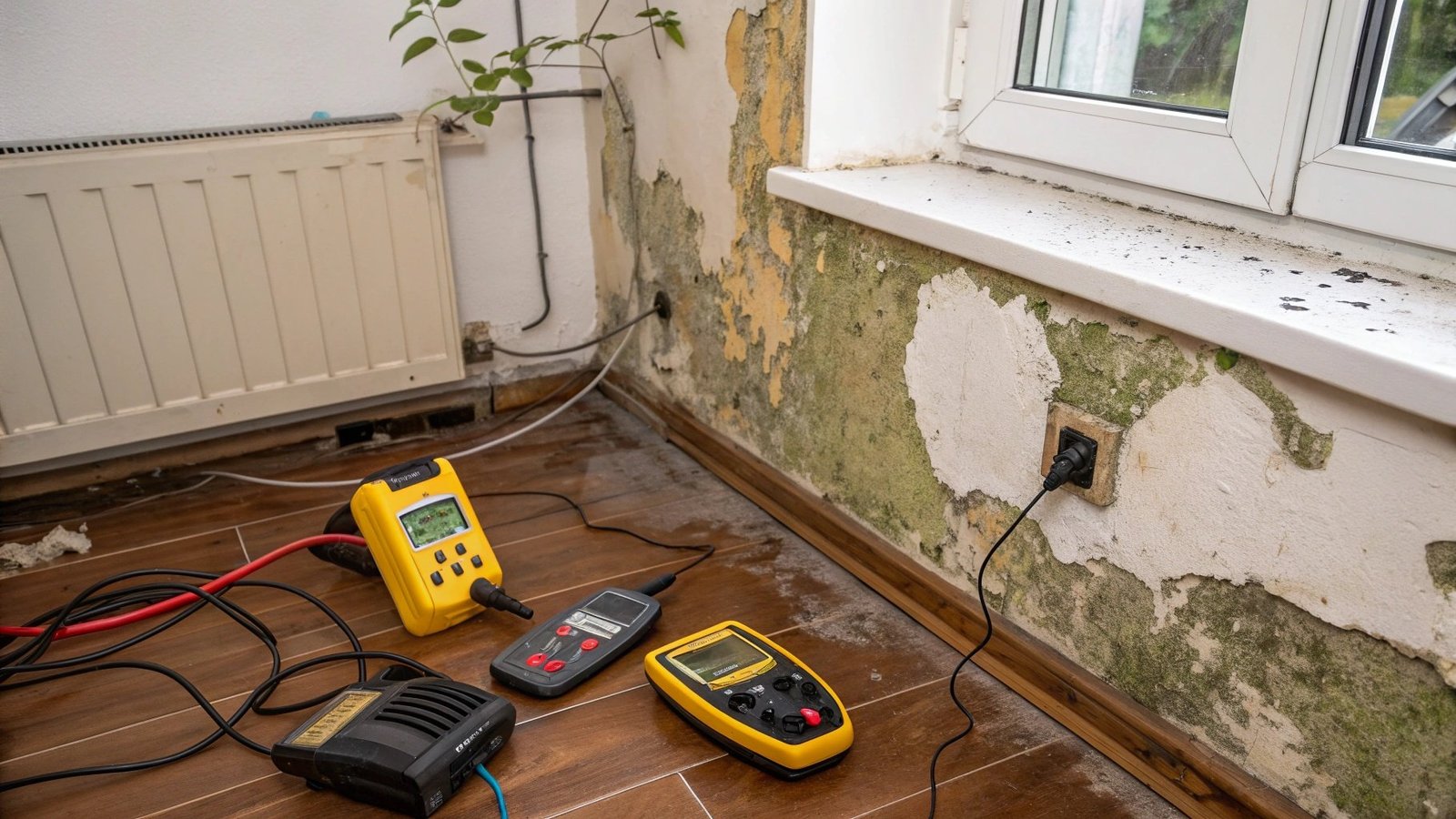
Damp is one of the most common and potentially serious problems found in UK homes. During my years as a chartered surveyor, I've inspected thousands of properties, and damp issues appear in approximately 40% of the houses I survey. The good news? Most damp problems are treatable if caught early and properly diagnosed.
In this comprehensive guide, I'll explain the different types of damp, how surveyors detect moisture problems, treatment options and costs, and most importantly, how to prevent damp from damaging your home.
Understanding the Three Types of Damp
Not all damp is the same. There are three main types of damp that affect UK properties, each with different causes, symptoms, and treatments. Identifying which type you're dealing with is crucial for effective treatment.
1. Rising Damp
Rising damp occurs when moisture from the ground travels up through walls via capillary action. This happens when the damp-proof course (DPC) has failed, is absent, or has been bridged.
Common causes:
- Failed or absent damp-proof course
- Ground levels raised above the DPC
- Bridging of the DPC by external render, internal plaster, or debris
- Porous building materials in older properties
- Damaged or deteriorated DPC membrane
How to spot it:
- Damp patches on walls, typically up to 1 meter high
- Tide marks on walls where moisture evaporates
- Peeling wallpaper or flaking paint
- White salt deposits (efflorescence) on walls
- Musty smell, especially in ground floor rooms
- Rotting skirting boards
- Damp patches worse in winter, better in summer
Treatment and costs:
Rising damp treatment typically involves installing a new damp-proof course. Modern treatments include:
- Chemical DPC injection: £500-£1,500 for an average room
- Physical DPC installation: £1,500-£3,000
- Replastering affected areas: £500-£1,000 per room
- Addressing external issues: £200-£1,000
Total cost for rising damp treatment: Typically £2,000-£5,000 depending on property size and extent of damage.
2. Penetrating Damp
Penetrating damp occurs when water enters the property from outside through walls, roofs, or windows. Unlike rising damp, penetrating damp can appear at any height and often corresponds to defects in the building's exterior.
Common causes:
- Damaged or missing roof tiles
- Cracked or porous external walls
- Failed pointing between bricks
- Damaged or blocked gutters and downpipes
- Faulty window and door seals
- Cracked render or damaged cladding
- Bridged cavity walls
- Defective chimney stacks
How to spot it:
- Damp patches that appear after rainfall
- Patches at any height on walls
- Damp appearing on specific walls (usually external-facing)
- Mould growth on walls and ceilings
- Staining on interior walls
- Wet patches near windows or doors
- Water stains on ceilings below roof
Treatment and costs:
Treatment focuses on repairing the external defect allowing water ingress:
- Roof repairs: £300-£2,000 depending on extent
- Gutter replacement: £400-£1,200
- Repointing brickwork: £50-£100 per square meter
- Wall rendering repairs: £500-£2,000
- Window seal replacement: £100-£300 per window
- Cavity wall tie replacement: £1,000-£3,000
Important: Penetrating damp is often easier and cheaper to treat than rising damp, as it usually involves fixing a specific defect rather than installing new damp-proofing systems.
3. Condensation
Condensation is the most common form of damp in modern UK homes, yet it's often misdiagnosed as rising or penetrating damp. It occurs when warm, moist air meets cold surfaces, causing water vapor to turn back into liquid water.
Common causes:
- Poor ventilation
- Inadequate heating
- Lifestyle factors (cooking, bathing, drying clothes indoors)
- Lack of insulation causing cold surfaces
- Blocked air vents
- Too many occupants generating excess moisture
How to spot it:
- Water droplets on windows, especially mornings
- Black mould growth, particularly in corners and on ceilings
- Mould behind furniture against external walls
- Musty smell
- Damp patches that feel cold rather than wet
- Problems worse in winter
- Condensation in bathrooms and kitchens
Treatment and costs:
Condensation is usually the easiest type of damp to treat:
- Improved ventilation (extractor fans): £100-£300 per room
- Dehumidifier: £150-£400
- Better heating systems: £500-£3,000
- Improved insulation: £500-£2,000
- Mould treatment and redecoration: £200-£800
- Lifestyle changes: Free!
Prevention tips: Open windows daily, use extractor fans when cooking/bathing, dry clothes outside when possible, maintain consistent heating, and ensure air vents aren't blocked.
How Surveyors Detect Damp
When I conduct a house survey, I use several methods to detect and assess damp problems. Understanding these techniques helps you appreciate why a professional survey is essential when buying a property.
1. Visual Inspection
The first step is a thorough visual examination looking for telltale signs:
- Staining, discoloration, or tide marks on walls
- Peeling paint or wallpaper
- Mould growth patterns
- Damaged skirting boards or plaster
- Efflorescence (white salt deposits)
- External defects that could cause water ingress
2. Moisture Meters
Professional surveyors use electronic moisture meters to measure the moisture content in walls, floors, and timber. There are two main types:
Pin-type meters: Have two probes that penetrate the surface to measure electrical resistance. Higher moisture content means lower resistance.
Scanning meters: Use radio frequency to detect moisture without penetrating surfaces, useful for taking readings through wallpaper or plaster.
Readings are typically given as:
- Under 15%: Dry, no damp issues
- 15-20%: Slightly elevated, monitor
- 20-30%: High moisture, likely damp problem
- Over 30%: Very high, significant damp issue
3. Thermal Imaging
Some surveyors use thermal imaging cameras that detect temperature variations. Damp areas appear cooler, showing up as different colors on the thermal image. This is particularly useful for finding hidden leaks or moisture behind surfaces.
4. Salt Analysis
For suspected rising damp, laboratory analysis of wall salts can confirm whether hygroscopic salts (which attract moisture) are present, helping differentiate between rising damp and other moisture problems.
Common Damp-Related Issues in Different Property Types
Victorian and Edwardian Properties
Older properties often have:
- No original damp-proof course
- Solid walls (no cavity) making them more susceptible to penetrating damp
- Aging lime mortar that can allow water penetration
- Original sash windows that may not seal properly
Common issue: Rising damp and penetrating damp through solid walls. Budget £3,000-£8,000 for comprehensive damp treatment.
1930s-1960s Properties
Mid-century homes typically feature:
- Original damp-proof course that may have failed
- Cavity walls that can have bridged cavities
- Flat roof extensions prone to leaks
Common issue: Failed DPC and flat roof leaks causing penetrating damp. Budget £2,000-£5,000.
Modern Properties (1990s onwards)
Newer homes often have:
- Good damp-proofing but can suffer from condensation
- Energy-efficient but sometimes poorly ventilated
- Potential construction defects if poorly built
Common issue: Condensation due to poor ventilation. Budget £500-£2,000 for ventilation improvements.
When to Call a Specialist
While some minor damp issues can be addressed by homeowners, you should call a damp specialist when:
- Damp patches are extensive (affecting multiple rooms)
- You suspect rising damp
- Previous treatments have failed
- Moisture meter readings are consistently high
- Structural timber is affected
- You're buying a property and the survey identified damp
- You can't identify the source of moisture
- Mould keeps returning despite treatment
Choosing a damp specialist: Look for companies that are members of the Property Care Association (PCA), offer independent surveys before recommending treatment, provide guarantees (typically 20-30 years for chemical DPC), and give detailed written reports.
Damp and Your Property Purchase
If you're buying a property and the house survey identifies damp issues, here's how to proceed:
1. Get a Specialist Damp Report
Commission an independent damp specialist (not one affiliated with a treatment company) to assess the extent and type of damp. Cost: £200-£400.
2. Obtain Treatment Quotes
Get at least three quotes for treatment from PCA-registered companies. Ensure they're quoting for the same scope of work.
3. Negotiate
Use the quotes to negotiate with the seller:
- Request a price reduction to cover treatment costs plus 10-20% contingency
- Ask the seller to have the work completed before completion
- Request a retention (money held back) until treatment is completed
4. Check Insurance Implications
Severe damp can affect home insurance premiums or cover. Declare any known damp issues to insurers.
DIY Damp Prevention Tips
Prevention is always better than cure. Here are practical steps to minimize damp problems:
Daily Habits
- Open windows for 15-20 minutes daily, even in winter
- Use extractor fans when cooking or bathing
- Dry clothes outside or use a vented tumble dryer
- Keep lids on pans when cooking
- Wipe down condensation on windows
Home Maintenance
- Clear gutters twice yearly
- Check and repair roof tiles promptly
- Maintain pointing between bricks
- Keep ground levels below damp-proof course
- Ensure air bricks aren't blocked
- Service heating systems annually
- Check and replace damaged window seals
Home Improvements
- Install extractor fans in bathrooms and kitchens
- Add insulation to reduce cold surfaces
- Consider positive input ventilation (PIV) systems
- Upgrade to better-performing windows
- Improve loft insulation and ventilation
Myths About Damp
Let me debunk some common damp myths I hear regularly:
Myth 1: "All damp is rising damp"
Reality: Only about 10% of damp problems are genuine rising damp. Most are condensation or penetrating damp, which are easier and cheaper to treat.
Myth 2: "Damp-proof paint will solve the problem"
Reality: Damp-proof paint only masks symptoms. You must address the source of moisture for a permanent solution.
Myth 3: "Modern homes don't get damp"
Reality: Modern homes can suffer from condensation due to poor ventilation and energy-efficient but sometimes overly-sealed construction.
Myth 4: "Dehumidifiers cure damp"
Reality: Dehumidifiers manage symptoms of condensation but don't cure structural damp problems like rising or penetrating damp.
The Cost of Ignoring Damp
Untreated damp doesn't just look unsightly - it can cause serious problems:
- Structural damage: Timber decay, wall deterioration (£5,000-£20,000+ to repair)
- Health issues: Respiratory problems, allergies, asthma
- Reduced property value: Damp can reduce value by 10-20%
- Insurance problems: Difficulty getting cover or increased premiums
- Failed sales: Many buyers walk away when surveys reveal damp
- Increased heating costs: Damp walls lose heat faster
Final Thoughts
Damp is a common problem in UK homes, but it's usually treatable when properly diagnosed. The key is identifying the type of damp you're dealing with and addressing the root cause, not just the symptoms.
If you're buying a property, never skip a house survey. A qualified surveyor can identify damp issues early, potentially saving you thousands in treatment costs or helping you avoid purchasing a problem property.
Remember: not all damp is serious, but all damp should be investigated. Early detection and proper treatment prevent small problems from becoming expensive disasters.
Need a professional damp assessment as part of your house survey? Contact our RICS qualified surveyors today.